Showing posts with label liebig. Show all posts

Wednesday, 29 March 2023

Cargo Handling 1932

A set of 1932 collector cards from Liebig, a portfolio of dockside views showing the loading and unloading of cargo ships.  Motor vehicles and locomotives are craned through the air along with minerals, while grain is loaded on board via a system of tubes and pipes.  These scenes have largely disappeared from today’s ports where the shipping container reigns supreme.  Very few items can’t be compressed or disassembled into a container. It was a spectacle that would have appealed to the technically minded child of the time growing up in the era of the Meccano Magazine (which itself featured many such illustrations on its covers).  The style of illustration has evolved with the times - gone is the precision and finesse that graced the cards of earlier decades to be replaced by more simplified drawing with heavier contours and a heightened colour palette.


Saturday, 20 November 2021

Ports of France (1912)

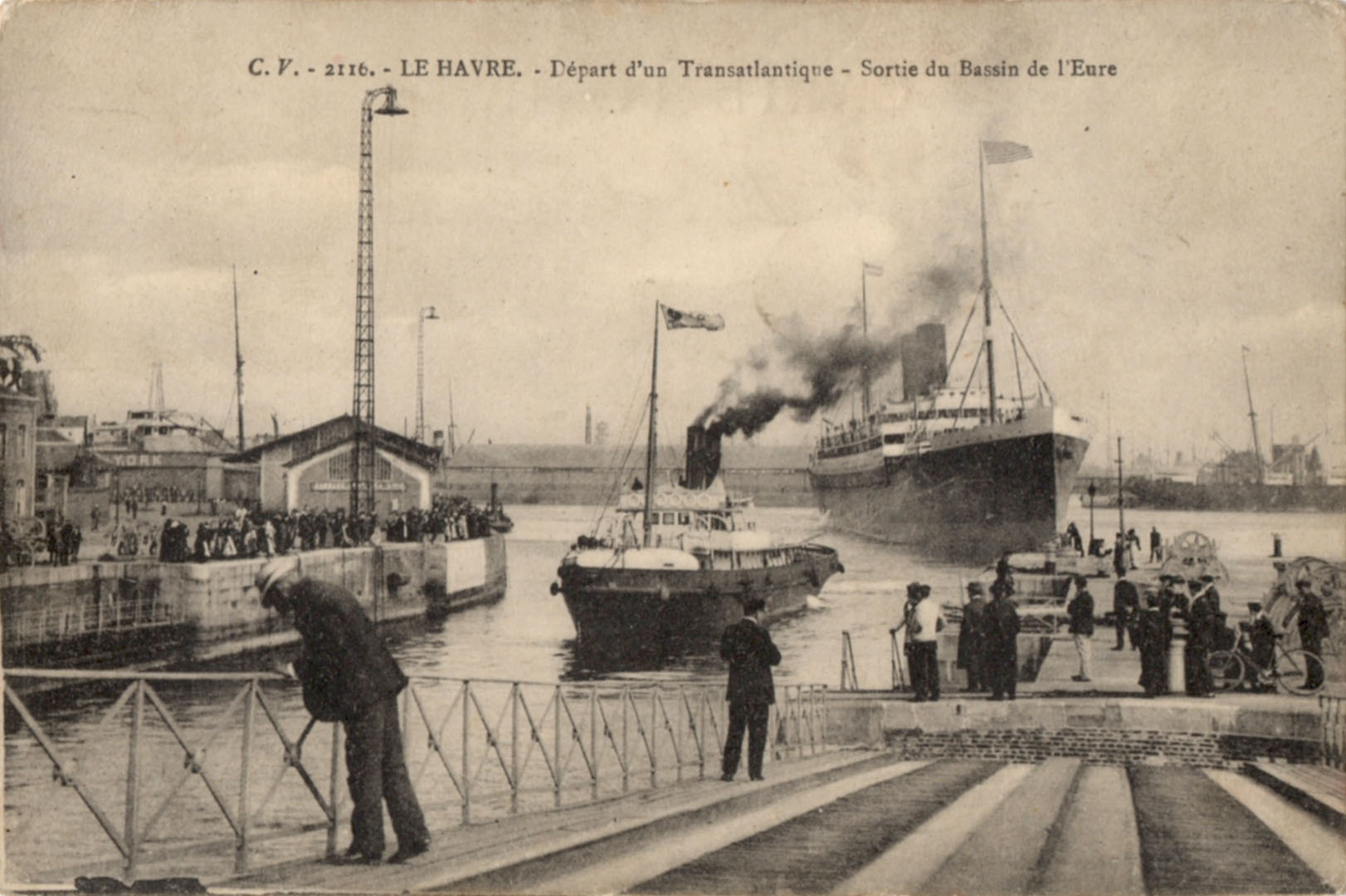
Liebig trade cards taking the collector on a trip around the great sea ports of France - Boulogne, Toulon, Marseille, Brest, Le Havre and Cherbourg. A rather partial selection, almost certain to offend the citizens of St-Nazaire, Bordeaux and Nantes. Each card offers an overview of the port plus two vignettes - one is a local landmark, the second is a character with local connections. A third vignette is an image of the precious meat extract. By way of contrast with these elaborate and floridly coloured compositions a selection of more prosaic images in the form of postcards are included.


Tuesday, 20 November 2018

Cotton Cultivation in pictures


Another set of 6 Liebig collectors’ cards – this time from 1909. Six panels describe the process beginning with the planting of seeds. In India, a plough is employed while in Africa, the ground is broken by a work gang of teenagers. Harvesting takes place in America’s Deep South and the crop is delivered to a Cotton Gin where the seeds and detritus are removed. Baling and weighing is next in the process before the finished bales are delivered to the waterfront on a horse drawn wagon to be loaded on to a steamship on the next stage of the journey. It’s a familiar subject for cards of this type – a simplified description of a staple product in a complex process that takes us behind the scenes to see what’s otherwise concealed. The distribution of tasks follows ethnic lines – Europeans get involved when machinery is required but all the hard labour is left to people of colour. It’s a sanitised version of a brutal reality. The working atmosphere is genially relaxed. An air of contentment prevails. No coercion, no armed overseers calling for more effort, no flogging of the indolent or disobedient. The illustrations possess a period charm but their studied avoidance of harsh economic realities was repeated in children’s books and annuals, in films and educational materials until relatively recently. Which is one reason why it’s so easy to find people today who believe that colonialism was basically a benevolent enterprise with a few isolated instances of cruelty and injustice.


Sunday, 14 October 2018

Van Gogh – a life in six pictures


If there’s an artist whose existence has penetrated almost every consciousness, it must be Van Gogh. And the one fact most widely known is that he cut off all or part of his ear in a nocturnal frenzy brought on by chronic depressive illness, packaged it up and presented it to a sex worker of his acquaintance. The details of his short career and dramatic life have been minutely investigated and recorded by legions of scholars. It was a life endlessly romanticised in popular culture and subject to intense psychoanalytic scrutiny, to the point that a distinct effort is required to see past all the accumulated mythology when considering the paintings he left behind. Every one of his major works has been submerged in an ocean of critical over-interpretation which the viewer has to set aside in order to respond on a personal level. So it’s quite refreshing to see all this turbulence condensed into just six images.


This set of Liebig collector cards was issued in 1959 a few years after Vincente Minelli directed the film Lust for Life in 1956, itself based on Irving Stone’s biography of the same name that kick-started the mythologising of Van Gogh in 1934. The first card shows the young Vincent driven by a life long religiosity, addressing a not especially attentive audience of miners and their families on the path to salvation. In the second we see our hero taking a drink and smoking a pipe in a working class Antwerp bar. The Parisian premises of Goupil & Cie are the scene of the third card – the manager, Theo Van Gogh is greeting his troublesome brother, Vincent. Card number four shows the Gendarmerie of Arles visiting Van Gogh in the Yellow House in the aftermath of the ear severing episode in December 1888. By May of 1889 Van Gogh was a patient in an asylum at Saint-Rémy where the fifth card shows him painting at his easel while a nun brings him some refreshment. Van Gogh’s funeral at Auvers is the final card – the inconsolable mourner collapsed at the table is presumably Theo. For another view of the artist, see Van Gogh the Salesman, posted in 2012.


Sunday, 25 June 2017

Road Surfacing 1909


Parisian highway maintenance – a sightseeing tour around the city with added work gangs. Much back breaking manual labour – levering paving slabs, spreading bitumen and laying cobblestones. No hi-vis clothing and no steel toecaps and tasks that, to this day are often carried out by hand. It’s a refreshing way to visit the City of Light. Cards issued by Liebig in 1909.


Friday, 3 March 2017

Street-life 1901


This is a chance to experience street-life around the world as beguilingly portrayed in 1901 by artists in the Liebig studio. For almost 30 years, since 1872, they had been picturing an ever expanding series of visual curiosities which were then reproduced by chromo-litho on to pocket-size collectors’ cards. The streets of 1901 appear remarkably well swept and animated by happy and prosperous citizens served by good humoured, industrious tradespeople – motor vehicles are nowhere to be seen. Most locations are bathed in warm sunshine except for St. Petersburg where horse-drawn sleighs charge through the snow and ice. Exotic national costumes and the presence of camels and elephants all add to the general air of wonderment. These cards were not designed for children – rather they were aimed at adults with an instinct for collecting and Liebig produced expensive looking albums in which the collector’s treasures could be displayed.


Wednesday, 11 January 2017

Our Daily Bread (1927)


Those whose task it was to come up with ideas for trade, collector’s, confectionery or cigarette card made much use of this type of theme. From field to table, from forest to paper, from the ocean to the plate, from cocoa bean to chocolate bar, et al. They made a handy starting point for a 4 or 6 part narrative set in a world familiar to the consumer. These cards were issued by Liebig whose main pan-European business was the processing of animal carcasses into liquid form for bottled spreads or dried, compressed powder for shaping and packaging into stock cubes. Liebig’s range of cards for collectors encompassed an encyclopaedic range of subjects, accessible and obscure, such as Entomology, Botany, Zoology, the Classical Orders of Architecture, Lives of the Great Composers, the Triumphs of the Caesars, the Campaigns of Charlemagne and a Taxonomy of Earthworms. Adopting a high standard of illustration and production values was a key factor in retaining and expanding the customer base by appealing to the instincts of collectors. This set of cards shows an orderly universe where sober and industrious workers conduct themselves with the minimum of fuss in well-lit uncluttered workplaces.