A set of 1932 collector cards from Liebig, a portfolio of dockside views showing the loading and unloading of cargo ships. Motor vehicles and locomotives are craned through the air along with minerals, while grain is loaded on board via a system of tubes and pipes. These scenes have largely disappeared from today’s ports where the shipping container reigns supreme. Very few items can’t be compressed or disassembled into a container. It was a spectacle that would have appealed to the technically minded child of the time growing up in the era of the Meccano Magazine (which itself featured many such illustrations on its covers). The style of illustration has evolved with the times - gone is the precision and finesse that graced the cards of earlier decades to be replaced by more simplified drawing with heavier contours and a heightened colour palette.
Showing posts with label trade cards. Show all posts
Wednesday, 29 March 2023
Saturday, 20 November 2021
Ports of France (1912)
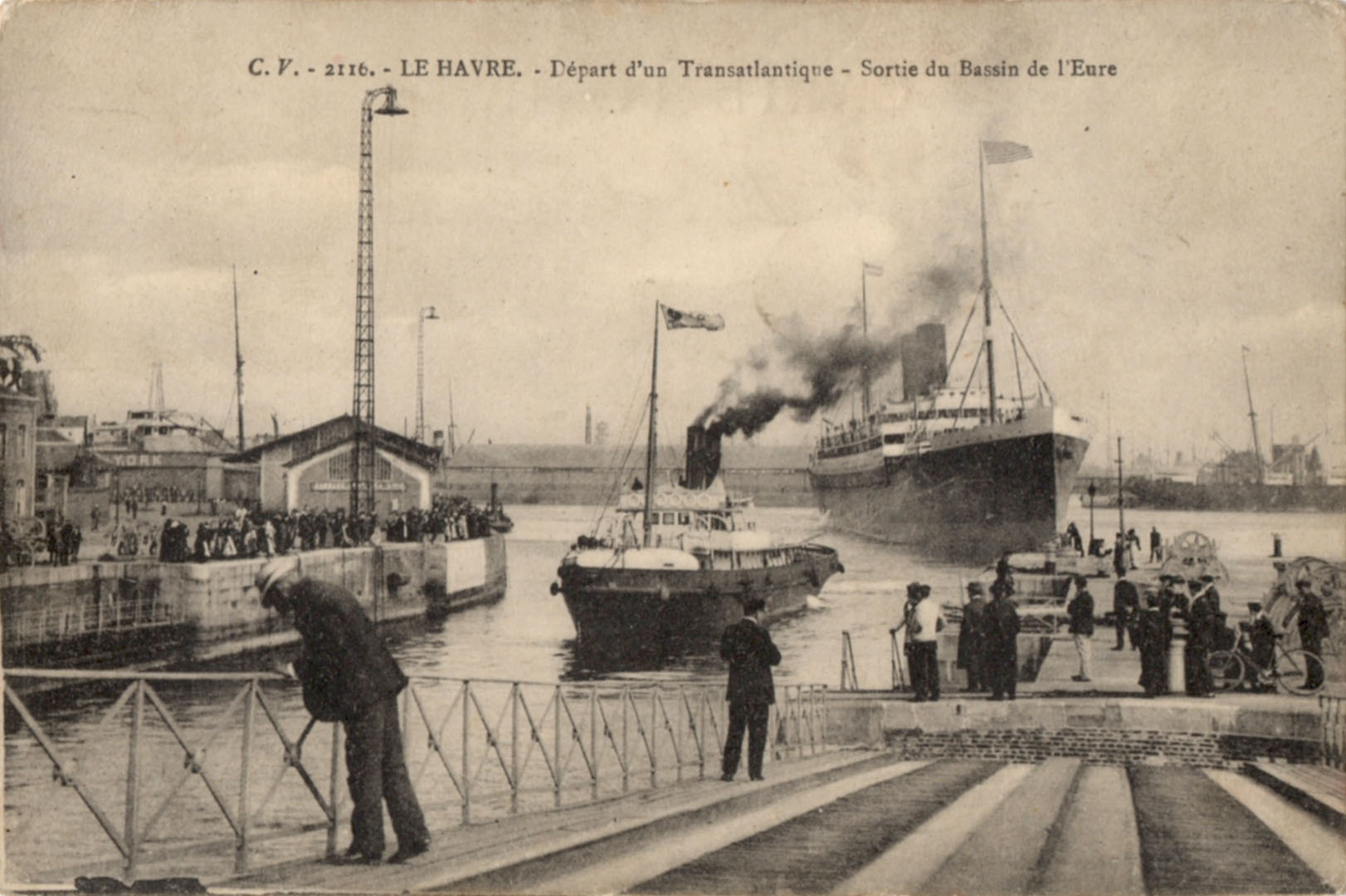
Liebig trade cards taking the collector on a trip around the great sea ports of France - Boulogne, Toulon, Marseille, Brest, Le Havre and Cherbourg. A rather partial selection, almost certain to offend the citizens of St-Nazaire, Bordeaux and Nantes. Each card offers an overview of the port plus two vignettes - one is a local landmark, the second is a character with local connections. A third vignette is an image of the precious meat extract. By way of contrast with these elaborate and floridly coloured compositions a selection of more prosaic images in the form of postcards are included.
Labels:
1912,
boulogne sur mer,
brest,
cherbourg,
le havre,
liebig,
marseille,
postcards,
toulon,
trade cards
Tuesday, 20 November 2018
Cotton Cultivation in pictures
Another set of 6 Liebig collectors’ cards – this time from 1909. Six panels describe the process beginning with the planting of seeds. In India, a plough is employed while in Africa, the ground is broken by a work gang of teenagers. Harvesting takes place in America’s Deep South and the crop is delivered to a Cotton Gin where the seeds and detritus are removed. Baling and weighing is next in the process before the finished bales are delivered to the waterfront on a horse drawn wagon to be loaded on to a steamship on the next stage of the journey. It’s a familiar subject for cards of this type – a simplified description of a staple product in a complex process that takes us behind the scenes to see what’s otherwise concealed. The distribution of tasks follows ethnic lines – Europeans get involved when machinery is required but all the hard labour is left to people of colour. It’s a sanitised version of a brutal reality. The working atmosphere is genially relaxed. An air of contentment prevails. No coercion, no armed overseers calling for more effort, no flogging of the indolent or disobedient. The illustrations possess a period charm but their studied avoidance of harsh economic realities was repeated in children’s books and annuals, in films and educational materials until relatively recently. Which is one reason why it’s so easy to find people today who believe that colonialism was basically a benevolent enterprise with a few isolated instances of cruelty and injustice.
Labels:
agriculture,
cotton cultivation,
exploitation,
india,
liebig,
trade cards,
usa
Sunday, 14 October 2018
Van Gogh – a life in six pictures
If there’s an artist whose existence has penetrated almost every consciousness, it must be Van Gogh. And the one fact most widely known is that he cut off all or part of his ear in a nocturnal frenzy brought on by chronic depressive illness, packaged it up and presented it to a sex worker of his acquaintance. The details of his short career and dramatic life have been minutely investigated and recorded by legions of scholars. It was a life endlessly romanticised in popular culture and subject to intense psychoanalytic scrutiny, to the point that a distinct effort is required to see past all the accumulated mythology when considering the paintings he left behind. Every one of his major works has been submerged in an ocean of critical over-interpretation which the viewer has to set aside in order to respond on a personal level. So it’s quite refreshing to see all this turbulence condensed into just six images.
This set of Liebig collector cards was issued in 1959 a few years after Vincente Minelli directed the film Lust for Life in 1956, itself based on Irving Stone’s biography of the same name that kick-started the mythologising of Van Gogh in 1934. The first card shows the young Vincent driven by a life long religiosity, addressing a not especially attentive audience of miners and their families on the path to salvation. In the second we see our hero taking a drink and smoking a pipe in a working class Antwerp bar. The Parisian premises of Goupil & Cie are the scene of the third card – the manager, Theo Van Gogh is greeting his troublesome brother, Vincent. Card number four shows the Gendarmerie of Arles visiting Van Gogh in the Yellow House in the aftermath of the ear severing episode in December 1888. By May of 1889 Van Gogh was a patient in an asylum at Saint-Rémy where the fifth card shows him painting at his easel while a nun brings him some refreshment. Van Gogh’s funeral at Auvers is the final card – the inconsolable mourner collapsed at the table is presumably Theo. For another view of the artist, see Van Gogh the Salesman, posted in 2012.
Labels:
1959,
liebig,
painting,
trade cards,
van gogh
Monday, 24 September 2018
Security Measures
Another group of collectors’ cards from Palmin, makers of cooking fats for German kitchens. As so often in the Palmin universe, the focus is on public safety – the theme of this series is sicherheitsmaßnahmen (security measures). We begin on the busy streets of Berlin where pedestrians navigate the traffic under the watchful eye of a uniformed officer. Next the focus is on the motorist whose natural tendencies to anarchic self-destruction are kept in check by traffic signals while the guardians of law and order observe events from an elevated tower (as seen in Pottsdamer Platz) at the centre of the intersection. Signals play a major part in the next picture, regulating the movement of trains for the avoidance of collisions. The remaining cards feature a ship’s radio officer, a mountain railway and an airport with an illuminated runway for night flights. Despite the great bonfire of regulation that preceded the 2008 financial crash, it remains a dirty word in the language of radical right politics. In the desperate search for economic advantage on the part of Britain Alone Against the World, inevitably regulation will come under ever greater assault. Especially those that protect the vulnerable and disadvantaged. It’s interesting to note that there have recently been calls from politicians for an end to speed limits on British roads. We can expect to see more of this sort of libertarian thinking, in defence of the inalienable right of the powerful to conduct themselves with reckless disregard for the safety of lesser mortals. We can also expect the regulations that protect the rights of property owners to be resolutely reinforced. No bonfires there.
Labels:
Germany,
palmin cards,
public safety,
trade cards,
transport
Sunday, 4 February 2018
Disasters Narrowly Avoided
Another series of trade cards issued by Palmin, manufacturers of coconut oil products – this time from the 1920s on the subject of children and road safety. An interesting group of scenarios featuring careless children and reckless road users - also a demonstration of corporate social responsibility on the part of business. Anything more than a marginal impact on human behaviour would appear unlikely but nobody could disagree with objective of improving public safety. Vulnerable youngsters in parlous situations are frequently depicted on these cards and reflect parental anxieties common to all cultures. Although the illustrator has thrown the unfortunate victims in all directions, care has been taken to avoid upsetting the audience with excessively graphic content. Follow this link for more hazards to children.
Tuesday, 24 October 2017
Children of the Fatherland
It would seem that growing up in the Weimar Republic was an unusually hazardous experience – danger lurked around every corner and only the most alert and agile escaped unscathed. These trade cards were issued by the makers of Echte-Wagner margarine with the worthy object of raising awareness of the perils of childhood. Multiple threats to life and limb are described here – a world of icy streets with out-of-control horses and a place where a juvenile kite-flyer is electrocuted. Equally improbably a small boy exits a train at speed when the carriage door spontaneously swings open – the consternation of the bourgeois gent with his newspaper is balanced by the indifference of his wife. For the illustrator involved it was not their finest hour – unconvincing clumsily drawn figures frozen in immobility. Nowhere more apparent than the spine-chilling tableau of target-shooting gone badly wrong. A dart has missed its mark and struck a hapless bystander in the eye – her inscrutable assailant makes no effort to help while his companion prepares to shoot as if nothing has happened. Somehow the ineptitude of the artist has inadvertently intensified the horror of the event we are witnessing.
Labels:
danger,
echte-wagner,
Germany,
hazards,
illustration,
incompetent drawing,
peril,
trade cards
Subscribe to:
Posts (Atom)