Showing posts with label american railroads. Show all posts

Tuesday, 18 March 2025

Rails over the Ocean

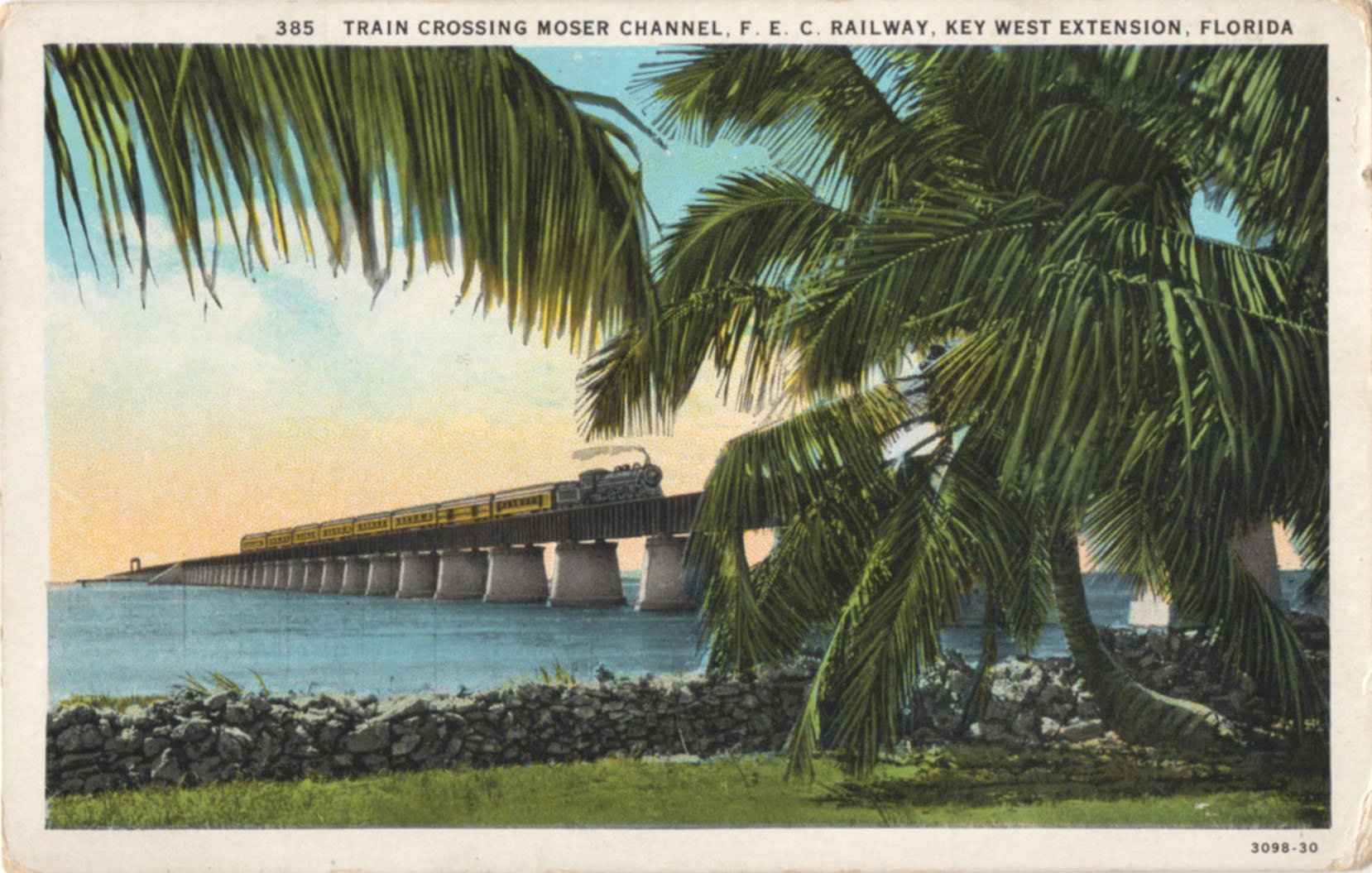
It took 4,000 labourers 7 years to build a 120 mile railroad connecting mainland Florida with the city of Key West. The project was financed by Henry Flagler, fabulously wealthy founder of Standard Oil and cost more than $50 million.  Flagler was a master of manipulating markets and freezing out competitors and until the advent of Anti-Trust legislation, he and Rockefeller were well on the way to establishing undisputed control of the entire American market for oil and gas. On the plus side he was an attentive husband and in middle age accompanied his ailing spouse to Florida in search of a cure in warmer climes. At which point his interest in fossil fuels declined in favour of a new passion for developing resort hotels and transport infrastructure to expand the market for Florida tourism.  The system of “convict leasing” enabled local prisons to supply him with a regular source of (literally) captive labour for his projects.  In a weird parody of the Manifest Destiny, Flagler’s army of contractors relentlessly drove south, clearing wilderness, draining swamps, dredging channels, building roads and luxury hotels on a steady advance via St. Augustine and Palm Beach that ended in Miami.

The connection to Key West was planned to move freight that had travelled via the new Panama Canal northwards to customers across America but the anticipated traffic never materialised. The postcard view above shows a vast but relatively passive crowd gathered at Key West in January 1912 to greet the arrival of the first regular service on the new extension to the Florida East Coast Railway. In the 1920s there was a daily train from New York to Key West timed to connect with a ferry to Havana. Key West to Miami was a 4½ hour trip thanks to a 15 mph limit on all the oversea sections.  Maintenance was a constant drain on resources and the railroad was on the verge of insolvency when fate intervened in the form of the Labor Day Hurricane of 1935 that overwhelmed the railroad beyond repair. In a final indignity, surviving sections of the infrastructure were commandeered to support a new Overseas Highway that survives to the present day. It had lasted for 23 years. Flagler died in 1913, just over a year after the railroad was inaugurated. If Flagler had not declined the honour of renaming Key Biscayne, there would be no city of Miami today - only Flagler and Flagler Beach, Flagler Dolphins, Flagler Vice, Flagler Art Deco …



Wednesday, 30 September 2020

Rail Tunnel to Canada

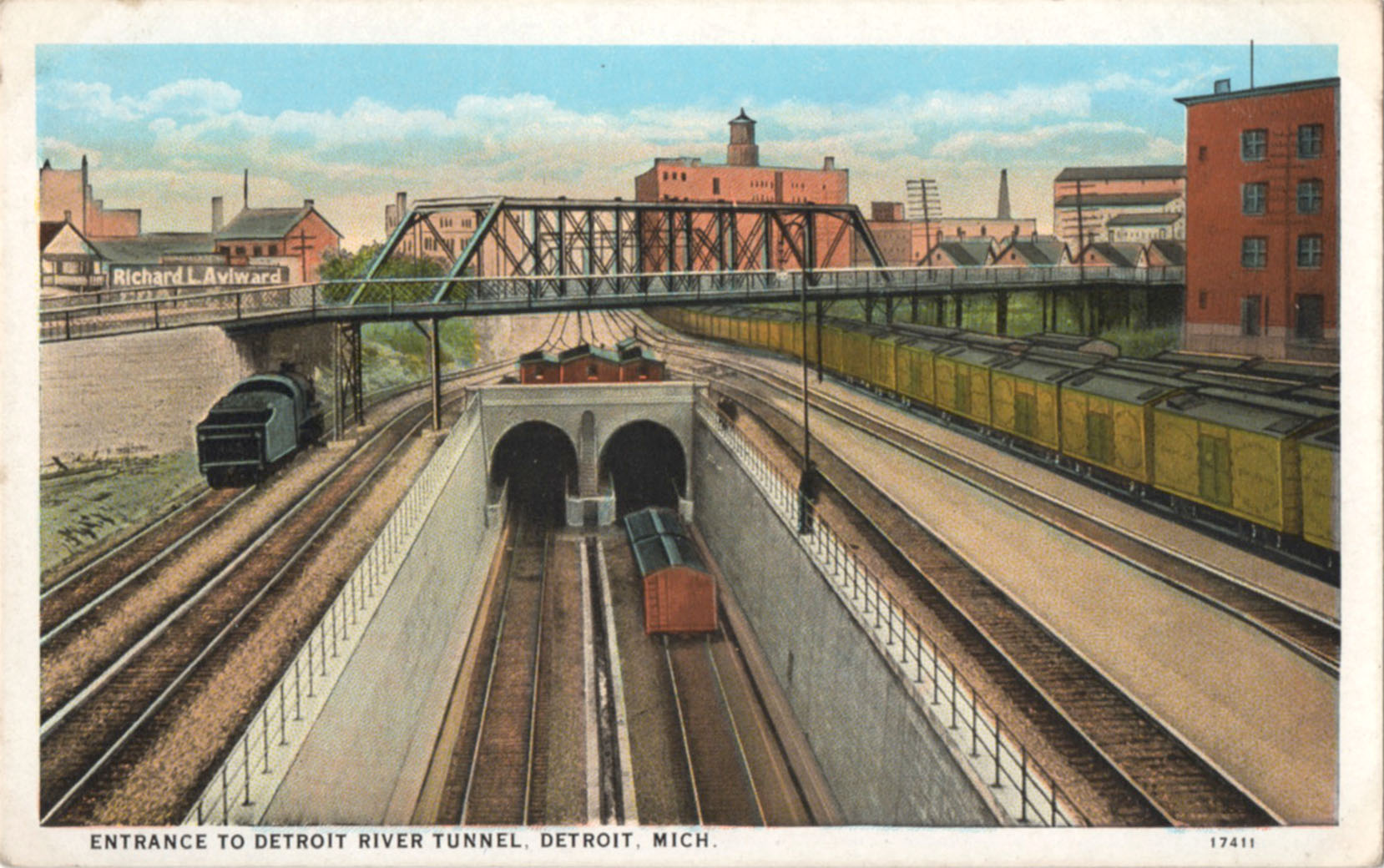
For twenty years before Detroit was connected to Canada via a road tunnel, the only physical link was a rail tunnel built in 1909-10 by the Michigan Central Railroad. It was clearly a thing of wonder given the variety of postcards recording its scenic attractions.  There’s a certain spatial complexity with a tunnel portal located beneath an over bridge with busy tracks on either side, but hardly enough to make it a place of pilgrimage. Freight trains still run through the tunnel which is now owned by the Canadian Pacific Railway although the surrounding infrastructure has largely disappeared leaving a wasteland with even less to commend it.  According to Wikipedia the area is now extensively patrolled by Homeland Security, the Detroit Police and railroad security agents. More to follow on the city of Detroit.


Friday, 29 May 2020

Railroads in Fortune Magazine


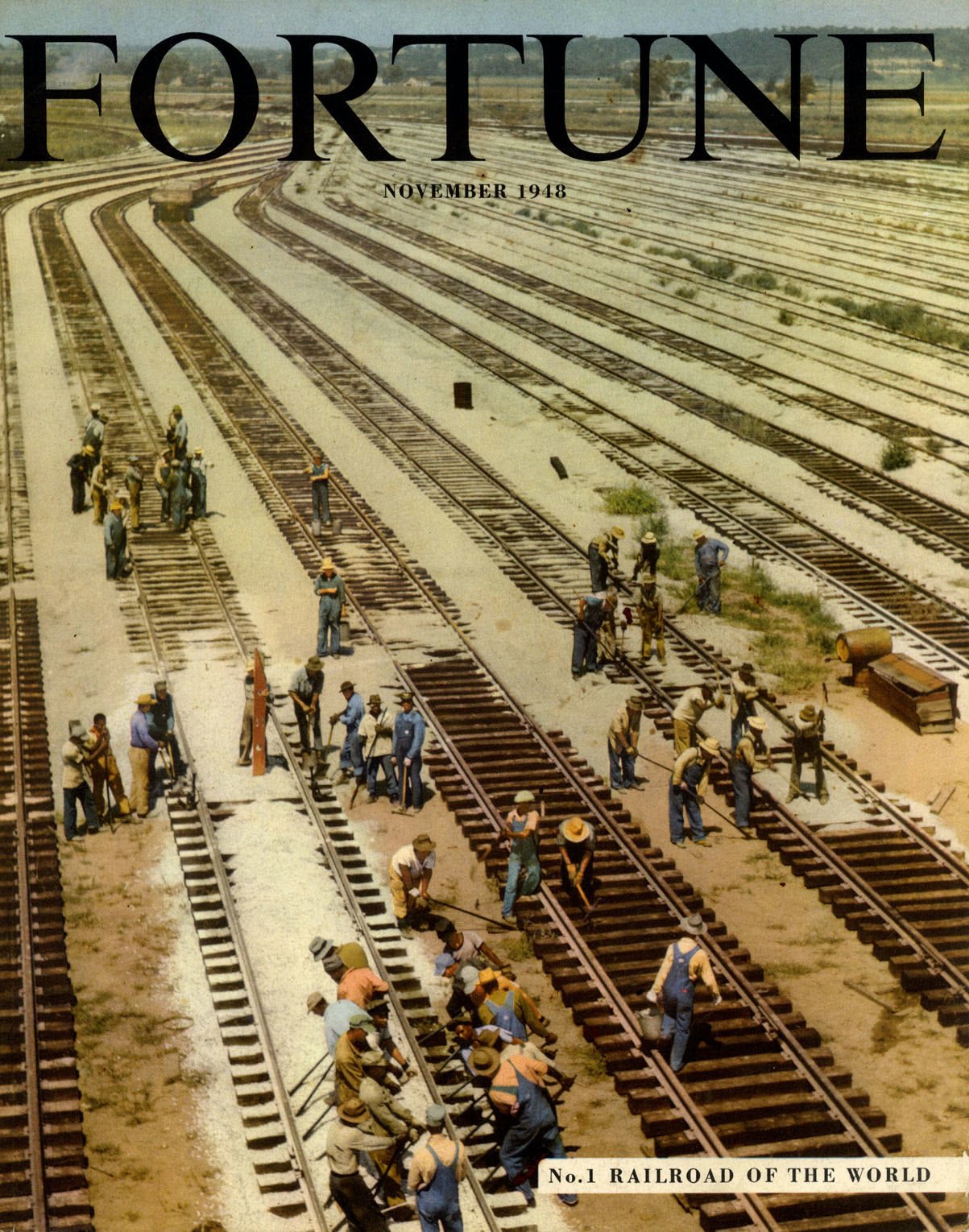
Fortune magazine was launched into the hearts, minds and pocketbooks of America’s business elite in 1930 at a time when steam powered railroads were the nation’s prime movers of raw materials and manufactured goods. Many businesses were highly dependent on the services of the railroad and managerial executives took a close interest in rail pricing and performance. Fortune specialised in long-form journalism, and regular in-depth analysis of the railroad business kept the executive class well informed. In their turn the railroads advertised their services to business leaders while the manufacturers of locomotives, rolling stock and railway equipment advertised to the railroads.


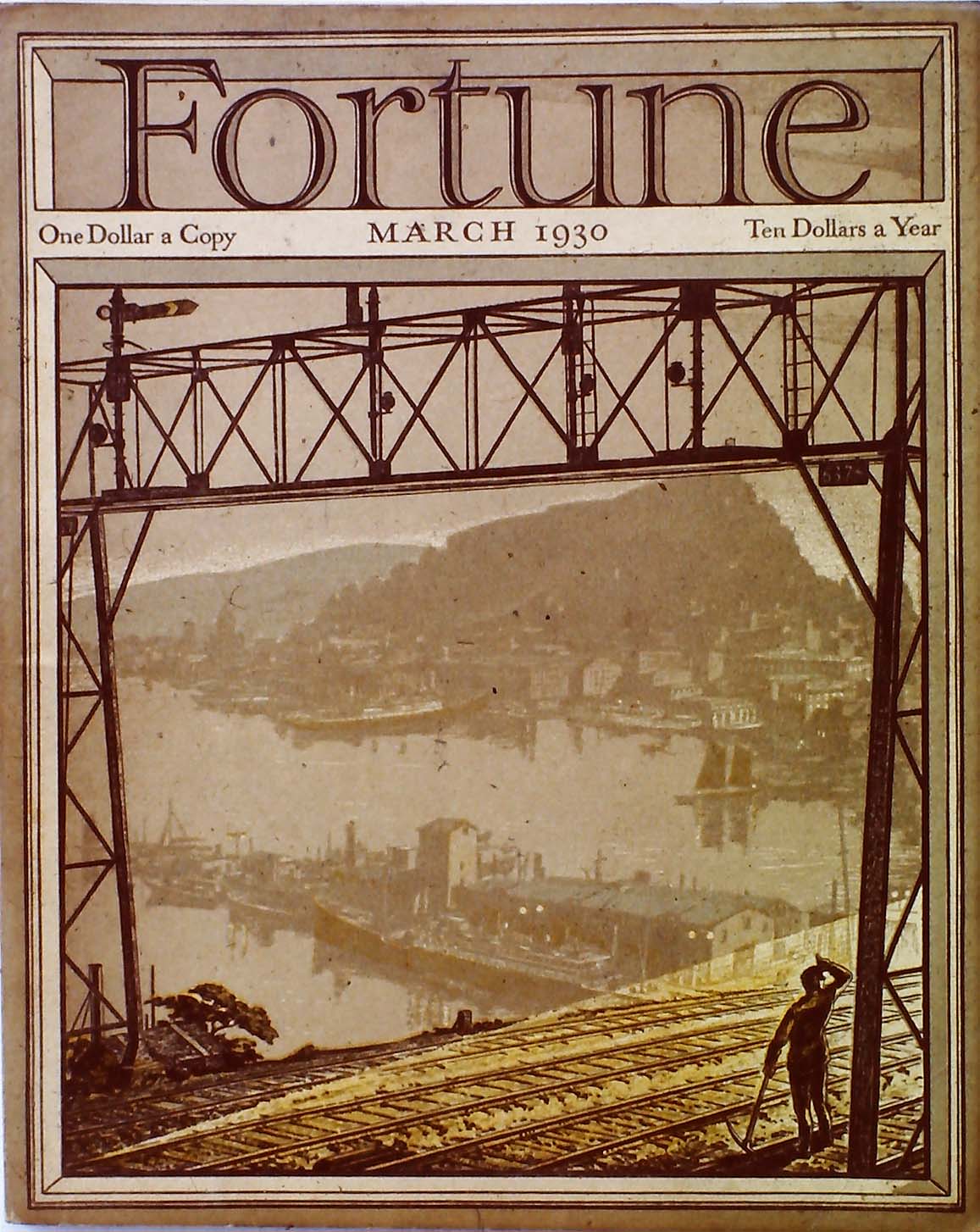
Railroads made their first appearance on the cover of the second issue of Fortune in March 1930 - beneath a signal gantry a track worker shields his eyes from the slanting sunlight while far below we see an idealised harbour scene, part San Pedro, part Amalfi Coast. An example of what might be called “industrial pastoral” where benevolent business dwells in harmony with the natural world, the sort of relationship Fortune commended to its readers. In February 1931 the cover took the form of an aerial illustration of a marshalling yard showing diagonal lines of freight cars under the guidance of a pair of muscular locomotives, each dispatching powerful plumes of smoke and steam into the atmosphere - a stylish celebration of steam power in which railroad grime is transformed via a palette of vibrant complementaries. A lively use of line and flat areas of dynamic colour (blue-green, orange-red and maroon) greatly enhance what might otherwise have been a banal composition. Neal Bose, the artist has left no more than a minimal trace of his existence - a biography that starts and finishes with: born 1894, Columbia TN, lived Chicago area. For the first decade there was a Fortune tradition of covers unrelated to the contents. Covers were treated in the same way that producers of luxury goods would employ the finest of packaging to add another layer of exclusivity.


Fortune cover artists enjoyed remarkable autonomy - some were submitted on-spec while others were the result of one word commissions. Full advantage was taken of this freedom and artists successfully offered up imagery that in subject and treatment, aligned with their personal interests. This culture of tolerance was all part of Fortune’s mission to raise the sights of business leaders to aspire to a higher sense of purpose. A change of policy in the 1940s led to more directed assignments and covers that reflected a major story inside the magazine. Representation and stylisation were succeeded by a cautious embrace of Cubist-inspired semi-abstraction, Modernism, montage and, finally, photography. Several of these cover artists were associated with Precisionism - Francis Criss and Edmund Lewandowski drew on their repertoire of crisply rendered geo-mechanical forms. Lewandowski (August 1945, March 1948) pushed his compositions towards abstraction with a judicious selection of re-ordered simplified details. Criss (November 1942) found visual drama in the intersecting vectors of transmission lines and electric catenary - at ground level a maintenance crew bustle around a fleet of streamlined coaches, every aspect equally favoured by the artist’s dispassionate attention.


For May 1936 John A Cook produced an image of a sequence of passenger trains entering and departing from a busy station observed from an elevated viewpoint. John O’Hara Cosgrave II’s boxcar image for May 1939 shared the Precisionist sensibility and would be revived 35 years later in a modified form as an album sleeve for J J Cale’s Okie issued in 1974. Modernist graphic designer, Lester Beall was responsible for the montage on the cover of the March 1947 issue, announcing an account of Britain’s newly nationalised railways. A subject of crucial importance to an American audience as evidence of the creeping tide of socialism that sent shivers down the collective spine. Finally, from August 1958 is a grid of railroad company emblems, locked together in a black mesh and separated by wedges of vibrant primaries and secondaries. This is the work of Bauhaus graduate Walter Allner, master of hard-edged graphic simplification, who served as Fortune’s Art Director from 1963 to 1974. In all, Allner designed 79 Fortune covers, beginning in September 1951.

Much more about Fortune is readily available at the Visual Telling of Stories and an extended visit is highly recommended. It conforms to nobody’s template and prioritises information over style. Curiosity will be rewarded with a wealth of unexpected visual treasures, under the guidance of unshowy fonts and the gravity-defying inverted pyramid of thumbnails.


Monday, 23 March 2020

Railroads on Parade 1939-40


This card covered publication was published to accompany Railroads on Parade, a musical pageant celebrating the early days of American railroads at the New York World’s Fair of 1939-40. The Railroad Building was the largest in area at the entire Fair. On the wraparound cover illustration we are shown how the power of steam left the ponies and oxen far behind - at the top an exotic streamliner represents the peak of contemporary technology. Famous mural painter, William A Mackay was the cover artist - it was his misfortune to die of a heart attack on a New York subway train in July 1939, less than 3 months after the Fair opened its doors on April 30th. It sets the tone for the anachronistic folksiness of the theatrical presentation. Kurt Weill was commissioned to compose the music. Since arriving in America in 1933, Weill had immersed himself in the American Songbook and mastered the idioms of the Broadway musical and popular song - this was his first opportunity to compose for a mass audience. Tickets were sold for only 25 cents and the auditorium could seat 4,000 spectators at up to 4 shows a day. The fair was a massive corporate jamboree designed to dazzle the American consumer with visions of future plenty. Major firms competed to offer the most architecturally extravagant pavilions in which to present the technology of the future. The railroad industry looked to the past and devised a historical pageant that catered to the public appetite for nostalgia as well as displaying the latest in locomotive development to build the market for future travellers. Please follow the links below for past posts on the World’s Fair.

World of Tomorrow
Meet the Middletons


Tuesday, 23 April 2019

To Key West in Postcards


The Florida town of Key West is at the southernmost point in the continental United States at the end of a chain of small islands linked by a causeway. It is closer to Havana (106 miles) than it is to Miami (127 miles). Other than an association with Ernest Hemingway (who had a home there from 1931-39), its distinction is its location. Visitors to places situated at extremities are frequently moved to send postcards home and the industry was quick to supply them in copious amounts.


There was a time when it was connected to the mainland by rail. The Overseas Railroad to Key West operated from 1912 to 1935 when it was destroyed in the Labor Day Hurricane – forty miles of track was washed away on September 2nd. With no funds to rebuild, it was abandoned by its owner, the Florida East Coast Railway. There being no compelling economic case for the railroad, most of the track-bed was converted to road use and designated US Route 1 – the Overseas Highway.


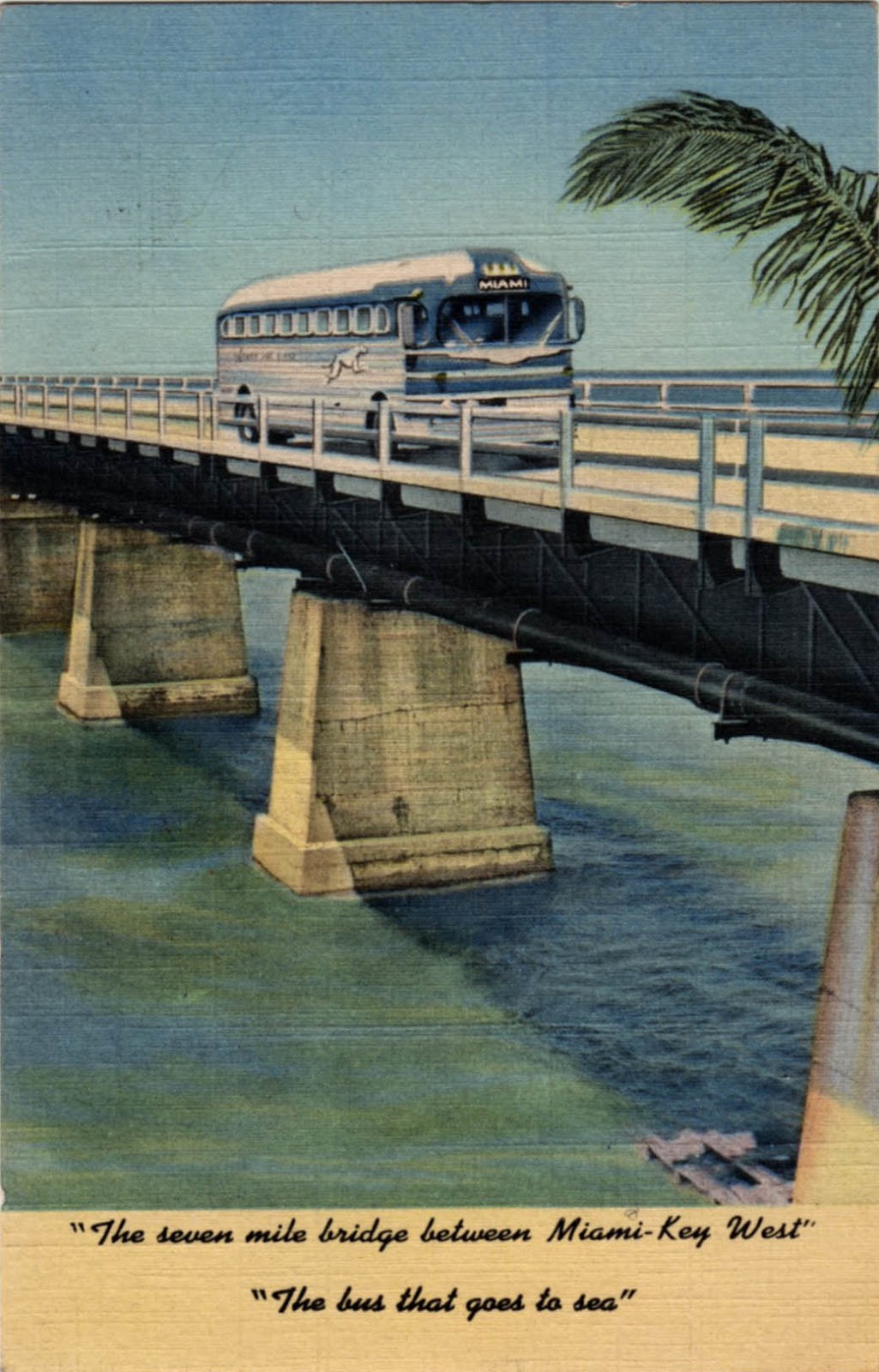
The Overseas Highway made a frequent postcard subject in the inter-war era of the linen card. The endless perspectives, big skies, gaudy sunsets and expanses of tropical blue seas lent themselves to the saturated colour of the linen postcard. For those without a motor vehicle, the Greyhound bus (the bus that goes to sea) was the only way to travel and they too turn up on postcards. One view of Pigeon Quay shows a queue of traffic driving off to sea with no seasickness as the caption has it. Amazingly it includes a pair of nonchalant pedestrians – difficult to believe they’re walking the entire 127 miles.


Tuesday, 15 August 2017

Santa Fe Railroad Advertising


The Atchison, Topeka and Santa Fe (routinely shortened to Santa Fe) was one of the three major railroads operating trans-continental passenger routes across the USA. The others were Union Pacific (Road of the Streamliners) and the Burlington Route (Vista-Domes and Zephyrs). The Santa Fe comfortably outperformed its competitors in terms of publicity – consistently more imaginative and eye-catching. Santa Fe played up its connection with the Native American traditions over whose lands its tracks passed. And when it came to named trains Santa Fe had by far the most extensive portfolio – including the Super Chief, El Capitan, California Ltd, the Grand Canyon, and San Francisco Chief. While the competition offered Domeliners, Astra Domes and Vista-Domes, Santa Fe tempted travellers with the louche delights of Pleasure Domes. The on-board catering was supplied by the Famous Fred Harvey and ranged from “beefsteak or brook trout to pheasant à la Périgueux”. From 1937 Santa Fe painted its fleet of streamline diesel locomotives in what became known as Warbonnet livery, as seen above. A Native American Circle and Cross motif was displayed on the loco front together with the name of the railroad on a bright yellow ground, itself surrounded by a bright red wrap that extended on to the loco sides in the form of a bonnet. A designer at General Motors (Leland A Knickerbocker) came up with the concept and it was eagerly adopted to great effect by Santa Fe. Competing railroads had trains that were every bit as visually spectacular as Santa Fe’s but their stodgy advertising and publicity was no match for Santa Fe’s bold and colourful offerings. An earlier post featuring Santa Fe advertising can be seen here.