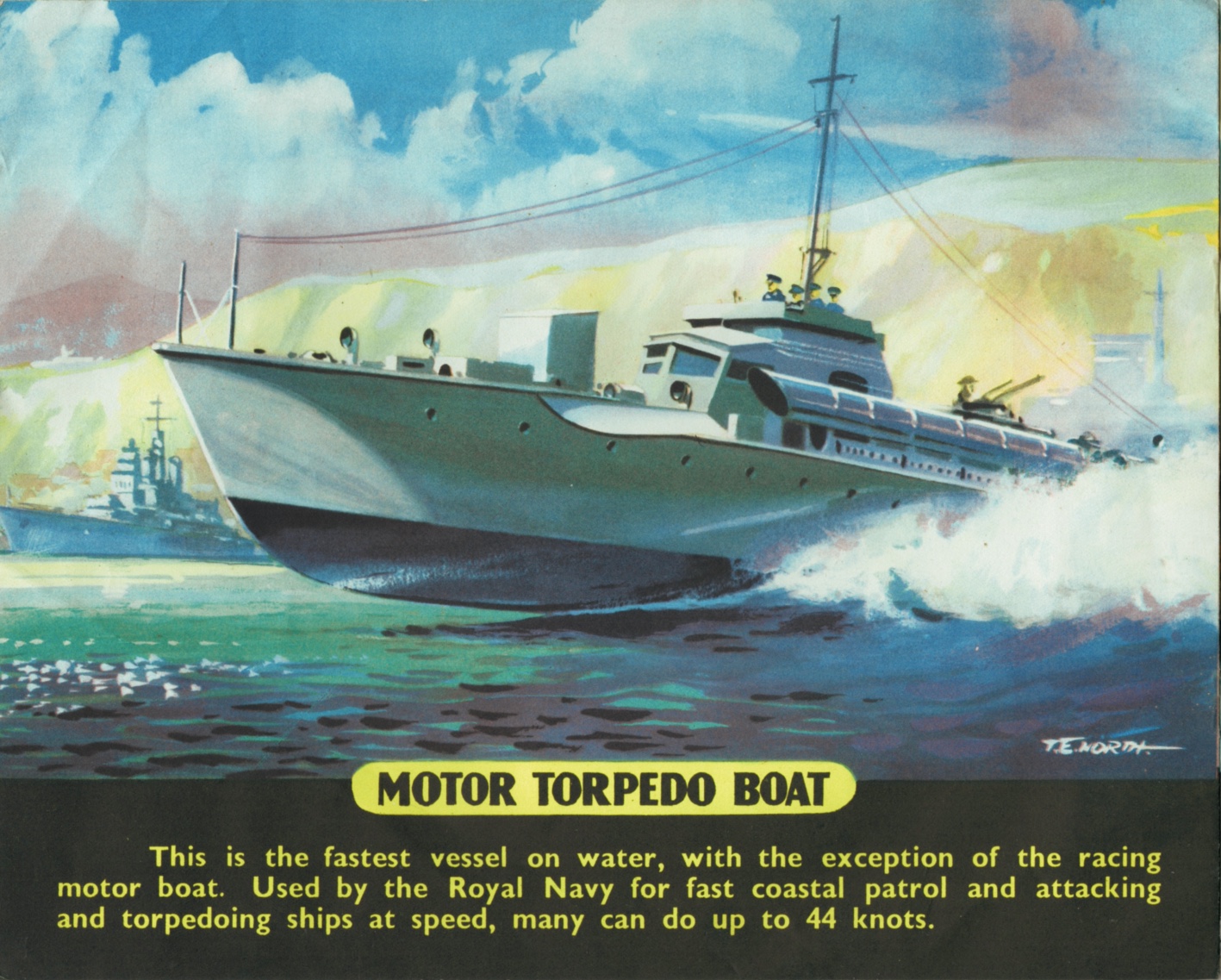
The book illustrations of T E North were featured here a few months ago when we posted about an aviation picture book (Airways) published in 1939. Notable for compositional originality and precision drawing, the qualities displayed in Airways faded in his post-war output in line with contemporary trends. After 6 years of war during which he served in the RAF, rebuilding his career and adapting to a much changed commercial situation would have been difficult. The services of an assiduous agent would have been essential and it may have been an agent who spotted his affinity for transport subjects and marketed his skills to publishers. Appropriately for an artist born and bred in Hull this example is a book of maritime illustrations for young people. Atmospheric effects predominate, brought to life by more gestural brushwork and a dramatically intensified colour palette. Perhaps the romance of the age of the great ocean liners and the cargo ship demanded a more vigorous approach. Recent collective memory of war fought at sea and the prestige invested in building ever larger and more luxurious liners fixed all things maritime firmly in the mid-century popular imagination in a way that’s inconceivable today. The image of the ship’s captain was a figure of steely resolve, commanding the loyalty of the crew in the face of danger from the elemental terrors of hostile seas. Young readers could be enthralled by the exotic network of international shipping, at the centre of which they were assured, Britain stood supreme and unchallenged - a supremacy that evaporated at breathtaking speed over the next decade as the nation first decolonised and later de-industrialised.