Showing posts with label usa. Show all posts

Tuesday, 27 January 2026

Fire over America


It’s a dangerous occupation so firefighters are heroes everywhere (other than those who start their own fires) and nowhere more so than in the US.  Serving as the guardians of their community and emblems of selfless devotion to duty, they pose on these postcards inside their vehicles or standing to attention outside their fire stations. The men of the Salvage Corps in Newark exhibit an air of grim resolve as they prepare for their next assignment.  Edward Croker was appointed Chief Fire Officer for the city of New York in 1899 at the age of only 35. He led by example and attended every major fire in the city, often first on the scene thanks to his automobile outrunning the teams of horses that carried his comrades. After leaving the Fire Department he became an advocate and promoter of fire prevention.


Equipped with water pumps and access beneath the hull to an unlimited water supply, construction of special purpose Fire Boats began in the early 1900s. Equally effective at extinguishing waterfront fires as those onboard ship. In Seattle the Duwamish went into service in 1909 - after retirement in 1985 the vessel was preserved as a National Monument. Opportunistic postcard businesses appear to have used the same images, with extensive but clumsy retouching on the pairs of cards from New York. Postcards of burning buildings in San Francisco and Chicago (where extreme cold is freezing the water jets on contact) follow. The final item is a memorial in Hoboken where the local community honours the fire crew who perished in the line of duty.


Friday, 16 December 2022

New York City Landmarks No. 4 - USS Recruit

This was a New York landmark that came and went within the space of 30 months but in its brief existence it made a major statement. Constructed from timber by the US Navy, it was a full size replica of a Dreadnought Battleship located in Union Square on the boundary between Lower and Midtown Manhattan.  Commissioned into the Navy in September 1917 with a captain and 30 crew members its function was to serve as a central recruiting station for the entire city. On board was crew accommodation, officers’ quarters and a suite of offices.  Fully armed with a complement of wooden replica guns, the ship stood ready to bombard the neighbouring real estate.  Visitors were dwarfed by its great mass but turned up in great numbers, attracted by an ever changing programme of patriotic and social events, including concerts and dances.  Over the next 2 years, more than 25,000 volunteers were recruited for service in the Great War.  When the end finally arrived in March 1920, the ship was dismantled with the intention of moving it to Coney Island - a plan that was abandoned when it was calculated that the cost of reassembly greatly exceeded the value of the salvaged materials.

The postcard view includes two prominent buildings that are now landmarks in their own right - in the centre is the Germania Life Insurance building (now a hotel) and to the left, the Everett Building of 1908. The headquarters of the US Communist Party was elsewhere in the square and it was a popular place for organised labour demonstrations.  Frank Dobias wrote a few helpful facts on the reverse and posted it (presumably inside an envelope) to an address in New Zealand, suggesting that it might have been an example of postcard exchange, a popular pastime in the early decades of the last century. This was a part of the general mania for postcards (that died away after the Great War) and involved collectors making contact with total strangers in far off countries in the hope that their collections could be mutually enhanced by swapping examples from their respective home towns. Something like it still happens, even into the digital age.  The post concludes with postcard images of real battleships and an overview of Union Square without a wooden ship.


Wednesday, 23 March 2022

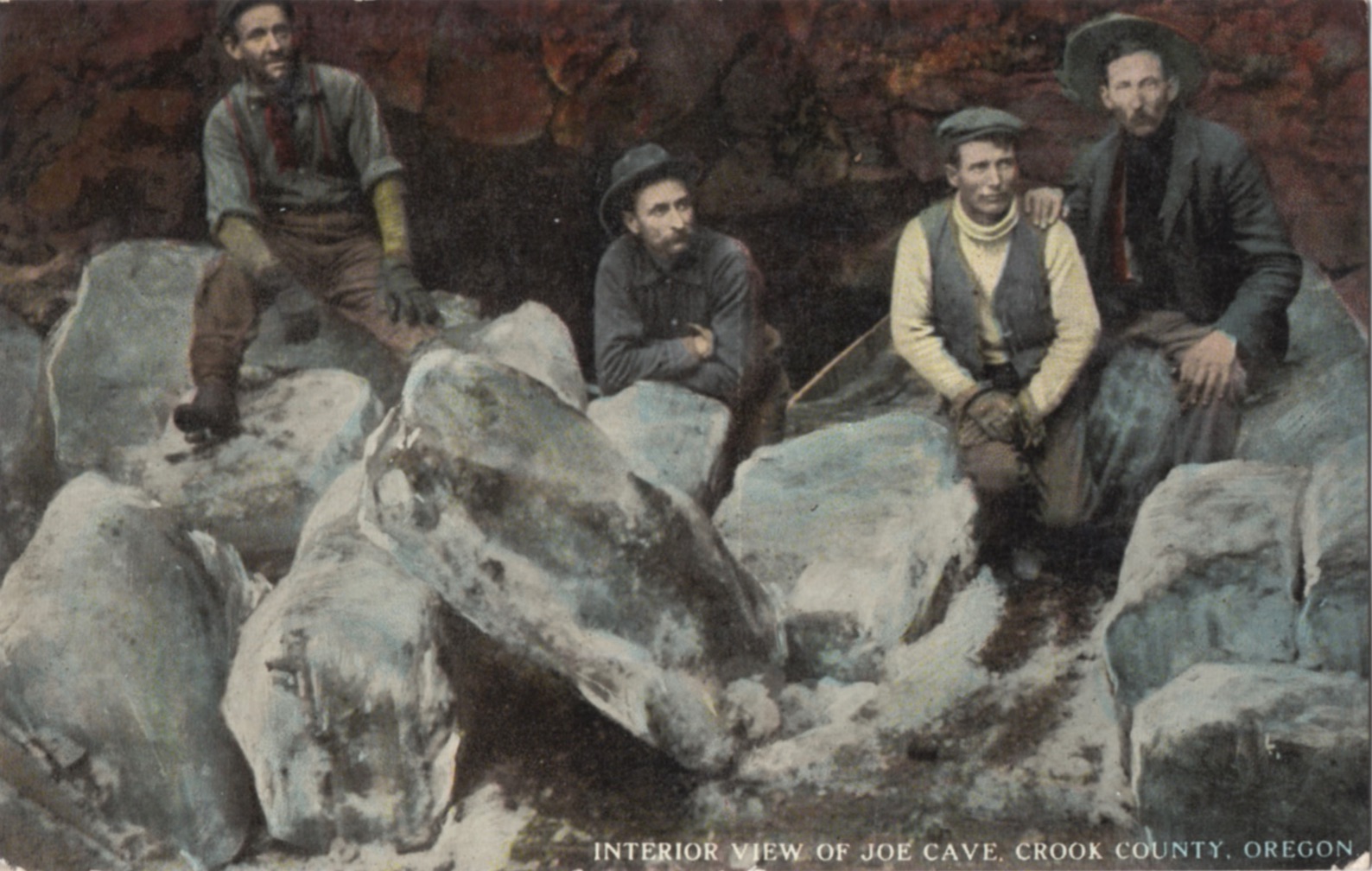
Postcard of the Day No. 108, Ice Men of Oregon

These are the four Ice Men of Crook County, Oregon who had the task of supplying the locals with  slabs of ice extracted from a hillside cave and hauled up a chute for onward transport to the nearby town of Bend. There was no shortage of ice in the winter months but in summer it commanded a premium price. This activity ended in 1920 when electricity became locally available. Up to then, the ice had been delivered to the local saloon-keeper who sold it on to the townspeople at a profit for refrigeration. Between them these two postcards tell the story of the ice gatherers and it’s pleasing that their gaunt and weary faces have been recorded and preserved for posterity. A local museum has a more detailed account here.


Wednesday, 14 April 2021

Down the Mississippi in Monochrome

Recent lockdown rooting through old negatives and digitising turned out to be a lot less rewarding than I hoped. Resulting scans were often hazy, unfocused, poorly exposed and tonally flat.  The passage of time has stubbornly failed to confer much in the way of retrospective luminosity. This group of photographs are from a $7 boat trip from Canal Street, New Orleans along the Mississippi river, the Algiers Canal and the Harvey Canal. It was a heavily overcast and humid day - the photos correspondingly low-key and devoid of shadow. It’s striking to see so much decay and dereliction - even the ships are drowning carcasses with flaking paint streaked with oxidisation.  Surprisingly some of them are from the Soviet Union and Iran. Waterside warehouses crumble into the river while fishing boats moulder at their moorings. The most viable economic activity appeared to be servicing the oil rigs in the Gulf of Mexico.  This was 1978 - by some measures the high point of the post-war era of universally rising incomes, taxation funded benefits and social care and a shrinking gap between income extremes. Jimmy Carter was in the White House but Ronald Reagan was on stand-by to roll out the great neocon pushback.  Major US cities were sliding into bankruptcy, the drug culture had crossed over into the mainstream and a sense of profound exhaustion seemed to have set in. The stage was set on which Reagan would declare “Morning in America.”

Part of the itinerary was a visit to the Rene Beauregard House at Chalmette, owned and cared for by the National Park Service.  The ante-bellum mansion overlooks the site of the Battle of New Orleans of 1815 in which a smaller, nimbler American force trounced a much larger, belligerent but incompetent British invading force.  Americans have every reason to celebrate this engagement while the British, who swaggered into battle with every expectation of an easy victory were taught a lesson that to this day appears less than fully learned.  A team of Southern Belles in period costume were on hand to explain - they were silent on explaining how the prosperity of the plantation depended on the labour of slaves.

Revisiting these photographs involves a little, lightweight soul-searching.  The question is whether the air of decay was a result of selection on my part, overlooking anything that didn’t fit with my preconceptions. This is where I suspect the influence of David Plowden whose gritty, beautifully composed  photos of the depredations of the industrial landscape in America I much admired.  Instead of looking through my own eyes, I was looking through what I thought were the eyes of Plowden.  All this speculation leads to an uncomfortable place where there needs to be a reckoning with the way that over familiarity with the work of eminent photographers can easily generate a culture of imitation - something I’m all too aware of when I take a hard look at my own efforts. Looking from another angle, perhaps expectations are just too high and the pursuit of authenticity and originality is best left to those with greater ability.  Thanks to the mobile phone there have never been so many photographers on the planet as there are now. As their efforts multiply in the cloud in their millions and billions of images I get no sense of widespread agonising over issues of authenticity and it’s only to be expected that some (or many) of these photos will quite transcend our own in boldness of conception.


Tuesday, 5 November 2019

Charleston, South Carolina 1978


Over the last few months I’ve been digitising some old slides and negatives from the analog era. The device I’m using is better than the budget examples widely on sale but the results bear no comparison with what can be achieved with professional quality negative scanners. It’s a necessary compromise given the astronomical price of the best equipment. For every interesting discovery there’s a major disappointment when the technical shortcomings of what I had fondly imagined to be a pleasing photograph are ruthlessly exposed. So, with apologies for the technical limitations and general fuzziness of imagery, I plan to post some occasional examples. The first selection come from a visit to Charleston, South Carolina in the summer of 1978, some 41 years ago.


My notes tell me we stayed on the tenth floor of the Francis Marion Hotel - “a twelve-storey dinosaur, overlooking the Cooper River, the bridge, the port and the Yorktown aircraft carrier”. As one of America’s oldest cities, Charleston was well stocked with colonial-era public buildings and residences, of which a few can be seen here. The camera recorded some shopfronts, eccentric on-street commercial signage, a Colonial Revival style Exxon gas station and an Art Deco cinema - much as I might do today. In a small downtown gallery there was an exhibition of photography that included work by Weegee, Berenice Abbott and Moholy-Nagy. My recollection is that they came from the Wagstaff Collection which is now in the Getty Museum. It’s quite possible the black and white photos of Marion Square from the hotel window were taken in imitation of Moholy-Nagy.


While we were there, Bruce Springsteen came to town and delivered one of his three hour marathon shows to promote his recent album, Darkness on the Edge of Town. Not yet 30, he had more than enough energy to race around stage, clowning and screaming, and driving a rather sober audience into a frenzy of appreciation. Much to my delight the second, and final, encore was Quarter to Three, a 1961 US number-one for Gary US Bonds. The bus trip to the Isle of Palms didn’t quite live up to the exotic promise in the name - but the beach was long and sandy with Atlantic rollers driven by a strong onshore wind.


Tuesday, 9 July 2019

Art Deco Chicago – the Field Building


The Field Building was designed by the Chicago firm of Graham, Anderson, Probst & White (GAP&W), architects of the Wrigley Building and Merchandise Mart and constructed between 1931 and 1934. It would be the last major building completed in the city for 20 years, thanks to the Depression and Second World War. The Field was the climax of GAP&W’s journey from a florid Beaux Arts style to Art Deco, via the unadorned functionalism of the Merchandise Mart. The lavish, extravagant decor featured in the 1925 Paris Exposition des Arts Décoratifs had made its way to the prairielands of the Mid West. A recent publication tells the story.


From the outside the Field Building is a bit of a brute – a massive 45 storey central slab with four 22 storey towers - one at each corner. Its reputation as an exemplar of Art Deco in architecture rests on the treatment of the circulation areas inside the building. A polished black granite surround to a soaring entrance that rises up to the 4th. floor is a foretaste of what lies within. Reflective marble and Terrazzo surfaces line the corridors, vertical light splashes from purpose built uplighters mark the route while fluted cladding draws the eye upwards. The progress of the high speed elevators can be monitored from the display panel in the lobby, formed in the shape of the building. Embedded in the panel is a brass finish US mailbox complete with Art Deco fonts and American Eagle. A public walkway connects Clark and LaSalle Streets – an overhead footbridge with an exquisitely detailed Art Deco clock face has a mirrored underside that adds to the sense of theatre. The materials, surfaces, finishes and trims were chosen to flatter the corporate client with their luxury value. The general effect is more restrained than, say, the Moscow Metro but it’s a step in that direction. Its completion ironically coincided with the lowest point in the Great Depression which, unlike the one we’re living through now, brought speculative and prestige development to an abrupt standstill.