Showing posts with label london life. Show all posts

Tuesday, 24 January 2023

More London Life

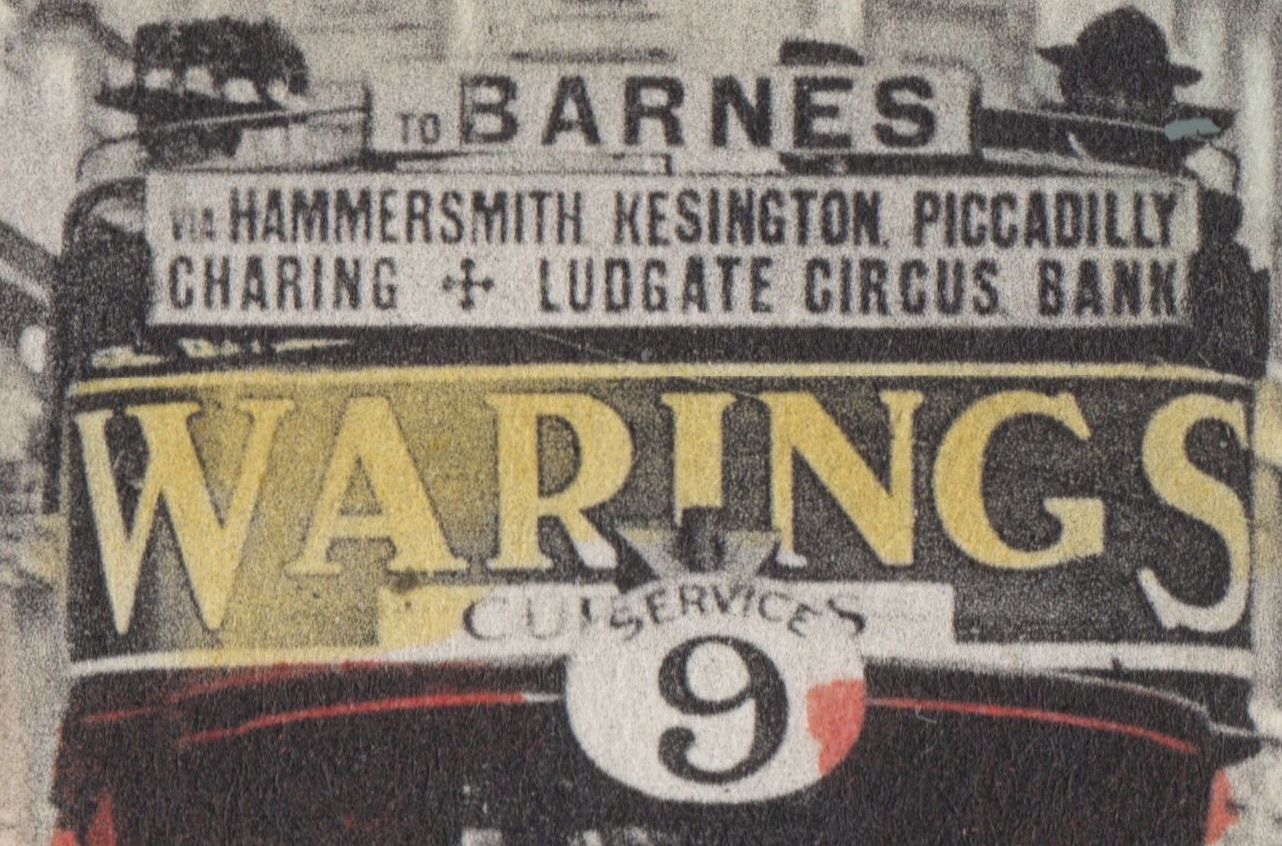
Thanks to German printing technology, this is an unusually well produced postcard with a detailed image of London buses posed outside the Bank of England. A somewhat diffident constable holds up the traffic alongside a young messenger boy who succeeds in occupying the centre of the picture. A handful of pedestrians stare in a desultory fashion as the camera operator prepares for the shot.  History records that the advertised play, The Ogre by Henry Arthur Jones, opened to lukewarm reviews on September 11th. 1911 at St. James’s Theatre which dates the postcard to the late summer of 1911.

Route 7's history can be traced back to 1 November 1908, when an un-numbered daily route operating between Wormwood Scrubs and Liverpool Street station, was allocated route number 7. Today’s route 7 connects East Acton with Oxford Circus. Route 9 is one of several claimants to the title of London’s oldest bus route, dating back to 1851. In its present form it runs between Hammersmith and Aldwych. Both routes are a lot shorter than in their heyday and neither penetrate as far east as Bank, making this an unrepeatable encounter. Pedantic note - both buses display spelling mistakes. An extra letter B has been added to Wormwood Scrubs on the 7, while the first letter N has been omitted from the word Kensington on the 9.


Monday, 3 October 2022

Postcard of the Day No. 110, Regent Circus

There’s no Regent Circus on today’s map of London but, according to Hermione Hobhouse in her History of Regent Street the intersection with Oxford Street was confusingly known as both Oxford Circus and Regent Circus in the first decade of the 20th. century.  It’s no surprise that in later years the name Oxford Circus would prevail, given that Oxford Street has its origin in medieval times whereas Regent Street was a product of more recent city planning.  Indeed the plans of John Nash included a grandiose Regent Circus far to the north of Oxford Street of which only a single quadrant was ever built.

The ornate shopfronts in the first postcard display a Victorian passion for embellishment in the pursuit of customers. Prominent among them are the premises of Peter Robinson, a department store that later expanded into a chain of more than 20 with a flagship store at Oxford Circus. Unusually, the card shows what would then be called a public convenience in an animated street scene including horse-drawn omnibuses and flower girls selling their blooms on traffic island. These itinerant traders made a popular subject for postcard publishers, often under the label of “London Life”. It wouldn’t have been an occupation for the faint-hearted, finding and securing a pitch, resisting extortioners and local bureaucracy alike.  Wherever they gathered the photographer wasn’t far away, even under the railway arches in Brixton.


Saturday, 26 January 2019

London Life in Postcards


Street life was a popular subject with postcard publishers in the early decades of the last century. In London, as elsewhere, the streets teemed with indigents from the lower orders, desperate to scrabble a living from commerce or deceit. Street entertainers, news vendors, dangerous and exotic animals, musicians and escapologists had their images reproduced on thousands of cheap postcards and offered for sale to customers who could take comfort from the fact that their station in life, however modest, was at least superior to this gallery of rogues and miscreants. The status of the Sandwich Man was not to be envied. The bowler hatted musicians may have perched a little higher in the social order but their talent for engaging the higher faculties with melodious serenading on flute and harp can only be guessed at. The enduring fascination with this subject extended to the post-war years, although by this time Britain could only be shown in black and white. The resolutely monochrome spectators of Charing Cross Road tell us as much as we need to know about that lugubrious period in our national life. I like to think of the figure in chains as that of Roger Stone but, of course it represents the great Brexit Warrior struggling to regain sovereignty.