Showing posts with label hull. Show all posts

Monday, 22 February 2016

Hull Streetlife Museum


Hull is one of those cities that is automatically disparaged even by people who’ve never been there, on the basis that however mediocre your hometown may be, it is demonstrably superior to Hull. It’s a useful rule that any universally despised place is well worth a visit and almost always much more interesting than many more over-valued places. Despite being one of the Luftwaffe’s most favoured and easily accessible targets, Hull still possesses a fine group of Georgian, Victorian and Edwardian buildings, significant medieval churches and a great collection of swing bridges and lifting bridges. There remains a strong sense of local identity and civic pride typical of Northern cities. One of Hull’s many attractions is the Museum of Streetlife – an ambitious title that perhaps promises more than it can deliver. It’s really a collection of vintage transport, imaginatively presented in a series of recreated street tableaux that provide context for the exhibits – at one time it would have been called Transport of Yesteryear.


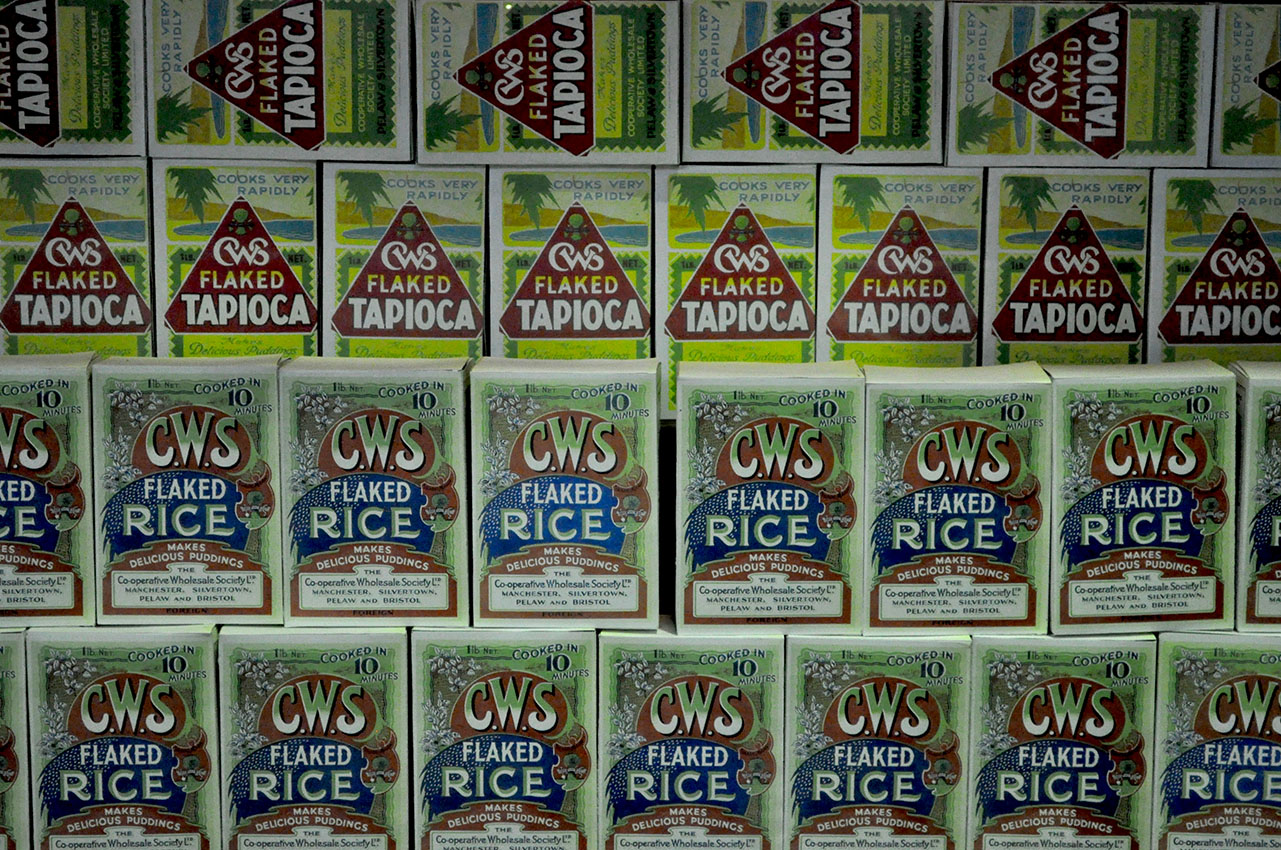
The museum presentation is a masterpiece of compression in which a signal box, a complete level crossing, and a parade of small shops serve as a backdrop to a collection of road and rail vehicles. The world of manual labour is memorably evoked in a dramatic presentation that includes stacks of hessian bales and heavy wooden crates loaded on to a 1933 Scammell 3-wheeler plus trailer, familiarly known as a Mechanical Horse. My only complaint is the absence of litter and detritus – the odour of stale tobacco and burning coal would have been a bonus. It’s interesting to speculate on what might be included in such a museum in the future. Looking back half a century or more to today’s shopping streets might find a place for Betfred, Greggs, Wonga, a Food Bank and a Charity Shop from the days when charity was still a legal activity. The vintage vehicles might include an Ocado van and a selection of delivery vans from Yodel, Hermes, Interlink, DHL and Fed-Ex. Dioramas could feature a crowd of juvenile inebriates spilling out of a pub on a Friday night or a road rage episode involving a cyclist, a black cab, an Uber driver and a Night Bus.




Friday, 8 June 2012

Great Railway Stations Number 7: Hull Paragon


A few years ago, the ineffable Kirstie’n’Phil, Channel 4’s evil impresarios of property porn topped up their bank balances by hosting a cut and paste show entitled Britain’s Worst Places to Live. As an exercise in gloating over the victims of misfortune it captured the spirit of the times to perfection. When the countdown was complete the city of Hull was awarded the plume of victory in this gruesome contest. A travesty of course - even the worst features of Hull are never as devoid of human spirit as the hollowed-out, soulless Home Counties villages where Kirstie’n’Phil’s over rewarded clients from the world of business and finance are so desperate to locate themselves. Hull offers a remarkable number of substantial Victorian buildings of quality, many of which are quite exceptional, and the best way to arrive in the city is by train. 


On arrival your train will be engulfed by the last of the great Victorian-era barrel vaulted, wrought-iron and glass train sheds, completed in 1904 by the North Eastern Railway and maintained in good order. There are five vaults over the platforms and two at right-angles that shelter the station concourse. The postcard view shows the main station buildings positioned parallel with the platforms as they appeared around 1905. Extensive remodelling has followed, including infilling the porte-cochère and today’s buildings are difficult to match up with the postcard scene. The former booking-office, hand-crafted in wood is carefully preserved although lacking any obvious function it seems more of a museum exhibit – the original mosaic floor and internal glazed brick and faience decoration also remain in situ. The concourse provides an impressive space for the circulation of passengers and includes a bronze likeness of poet Philip Larkin – a generous gesture on the part of the citizens of Hull (who raised the cash to pay for it) toward a long-term resident who never went out of his way to befriend the locals. There must be a suspicion that the sculpture displays more animation than the subject would have exhibited in real life.