Showing posts with label commercial vehicles. Show all posts

Wednesday, 27 July 2016

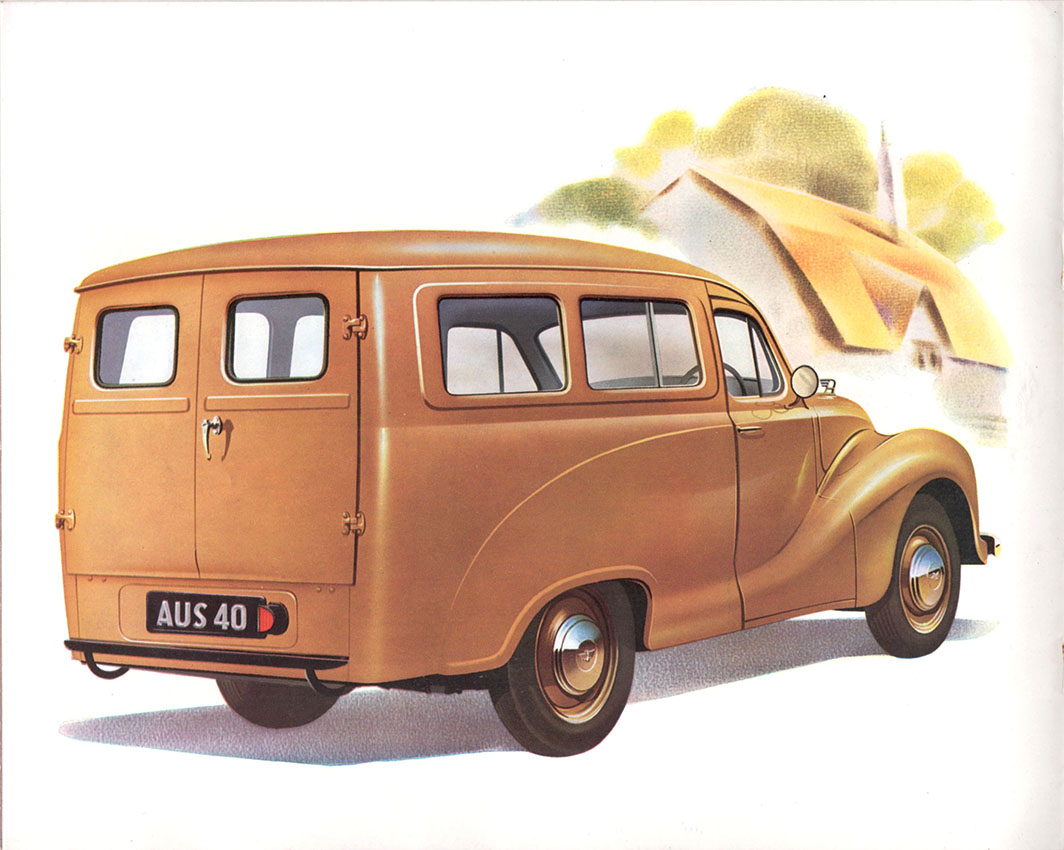
Austin A40 Light Commercials, 1951


A sales brochure from the Festival Year, 1951 – when British-built vehicles ruled the streets. Brexit roads where Japanese cars were as yet unknown and only the occasional Fiat or VW intruded on an Anglo-Saxon virtual monopoly. Not only that, but in the pre-container era large volumes of British vehicles were hoisted on to merchant ships for distribution across the Commonwealth and Empire. The cover illustration is an unlikely sun-drenched evocation of a typical mid-century city centre (minus the bomb-sites) where sturdy Neo-classical Edwardian buildings tower over streets busy with pedestrians. Post-war optimism unlimited – with a curious absence of street lighting. On the inside pages air-brush artists have been busy creating flawless likenesses of all the new models in their natural habitats. Plus exciting cutaways of advanced technical features. All-steel construction and dependability were key selling points as well as “congenial driving conditions”.




Monday, 29 February 2016

Austin Omnivan 1956


In 1956 British-owned volume vehicle builders were about to enter a long period of turbulent decline that would lead inexorably to their extinction by the end of the century. The captive market in the Commonwealth and allegiance to all things British was on the point of disappearing and competition from other European manufacturers and from Japan was about to put the British industry under severe pressure. This vehicle design borrowed from European competitors (especially VW) for its shape and proportions and with revisions would remain in production for another 11 years. Smoother contours and an undivided windscreen distinguished it visually from its predecessors. The publicity brochure shown here relied upon the skill of the illustrator for its cheery visualisation of a gently idealised post-war world, rendered in a style we might call Ladybird-lite. The professional illustrator would soon be supplanted by the photographer as printing techniques improved but in the late 1950s the hand-drawn image conveyed a sense of immediacy and visual power that could not be easily matched in cheaper photographic reproduction.